Just like Little Kaia, these kids have given me insight as to what it's like for younger people to experience the world; Kaia showed me her perspective on nature, and these kids showed me their perspectives on games, zoos, and electronics.
Lavinia is in Room 6 (10-12 year olds) of St. Pius X. She wrote about her day at school, particularly her game of "King Ball." I'm not sure what that is, but it definitely sounds like dodge ball. Lavinia is so good at it, either way: she never got out. I wish I was that good when I played. It has been a long time...
Jenna F. of Mrs. Goerend's class wrote a persuasive essay about animals in zoos. She is very persuasive indeed! I love how she used specific examples and even quotes to prove her point. She is in sixth grade, and she is becoming a wonderful writer!
Michala of Mrs. Shelter's seventh grade class understands the pros and cons of electronics! This is very important in realizing what the best way of communication can be at the appropriate time.
It's always so interesting to me to read how kids of different ages see and think about different things. Reading their blogs give me a taste of what I'll be dealing with one day when I have my own classroom.
Sunday, March 28, 2010

What a beautiful inspiration!
I just read an amazing story about a beautiful little girl named Kaia: she lives in Qatar, and her father took her outside to truly experience the world - whether "beautiful" or not. Kaia took her own pictures of her surroundings, showing just how beautiful the otherwise-perceived "ugliness" can truly be. Lucky for the world, Kaia shared her pictures and experiences on her blog, and I highly recommend that everyone take a look - and be inspired as I was when I saw them. At only three years old (!), Kaia has been an inspiration to me as a future mother and aspiring educator. I can only hope that others will be able to see the world as Little Kaia can. The inspiration doesn't stop there...
Kaia's father actually got in contact via Skype with Mr. Chamberlain's class in Missouri to answer any questions they had about Qatar - or anything they couldn't experience for themselves all the way in Missouri. Not only is this a huge step in the utilization of technology for these students, but they were able to fully appreciate all they wanted to know by their second-hand experience with Mr. Raisdana (who gives his own account of the matter here): a legitimate experience which cannot be fully found by reading books alone. These students will never forget this experience (they even responded with their own thanks!), and hopefully it will open doors to more communication and knowledge-searches.
There's nothing like a genuine experience to generate genuine interest.
Kaia's father actually got in contact via Skype with Mr. Chamberlain's class in Missouri to answer any questions they had about Qatar - or anything they couldn't experience for themselves all the way in Missouri. Not only is this a huge step in the utilization of technology for these students, but they were able to fully appreciate all they wanted to know by their second-hand experience with Mr. Raisdana (who gives his own account of the matter here): a legitimate experience which cannot be fully found by reading books alone. These students will never forget this experience (they even responded with their own thanks!), and hopefully it will open doors to more communication and knowledge-searches.
There's nothing like a genuine experience to generate genuine interest.
Sunday, March 7, 2010
Randy Pausch's Last Lecture
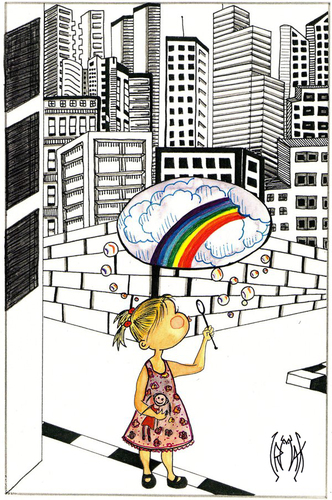
Achieving Your Childhood Dreams
The theme for this lecture was "what would you teach if you were teaching your last lecture?" Dr. Pausch chose to teach how to enable the dreams of others and how to learn from these lessons of life. He stresses the importance of having specific dreams, and throughout his life, he met many brick walls in his pursuance of his dreams. He characterized this brick wall throughout the lecture as being a definite obstacle - for those who were unwilling to surpass it; they're presented to stop the people who don't want to pass them badly enough; these brick walls show your dedication and allows you to prove just how badly you want something. Dr. Pausch undoubtedly faced many - and still is today, but he says that "We cannot change the cards we are dealt, just how we play the hand."
Dr. Pausch says that the best way to get anyone to learn is through a "head fake": teach hidden values as an indirect lesson. Hard work, sportsmanship, perseverance, and teamwork aren't taught directly - but playing football is the best way to teach them. The best way to teach these values is to make them think they're learning something else: something fun. Also, give feedback. The best gift an educator can give is to teach the students how to be self-reflective. This way, students can receive their feedback, interpret it, listen to it, cherish it, and USE it. Results may not be immediate, but "if you wait long enough, people will surprise and impress you."
Sometimes NOT achieving your goals is just as influential: it's all about what you learn from the experience - "because that's what you get when you don't get what you want." It's important to remember who helped you get to where you are now: teachers, parents, friends, colleagues, and students deserve their credit in your success. The best way to get the most out of what you're experiencing is just to HAVE FUN. "Never lose the child-like wonder" because with children, there are no boundaries; they see no limits, and Dr. Pausch even points out that the biggest disservice you can do to a student is to set a bar or boundary anywhere for them. Also, help others, be good at something, don't bail, show gratitude, don't complain, work harder, and find the best in everybody - no matter how long it takes.
This was probably the most inspirational, relevant lecture I've ever heard. It was full of personal, touching examples, and Dr. Pausch really knew how to utilize them. It actually brought tears to my eyes when he brought out the birthday cake for his wife and had the entire audience sing to her. This was his way of showing how important it is to focus on others, not yourself. I learned a lot from this lecture - because of the head fake he implemented! This lecture was not about how to achieve your dreams; it was about how to lead your life: "Lead it the right way, and Karma will take care of the rest. Your dreams will come to you."
I was especially touched when he revealed the biggest head fake: this lecture wasn't for anyone in the audience... it was for his children.
I would recommend this video to anyone. It definitely IS worth the time.
Thursday, March 4, 2010
My PLN
As I have said in most of my previous blogs, I have learned so much so far this semester in this class - more than I ever could have imagined! - and I owe it all to my educators. Not until recently did I realize that everyone who has helped me in this educational journey is part of my personal learning network. I have learned how to use Google as more than just a search engine, and I believe that has been the most helpful resource I have learned to use thusfar. Google Docs has assisted me in Dr. Strange's class AND in my other classes and personal life. Some of the projects I have done in EDM 310 I have shared with people I know just because I was proud of them - and I used Google Docs to display them! I learned how to use iTunes and iTunes University for the first time, and I realized how valuable podcasts are to students. YouTube offers many educational tools accessible to anyone. Wikipedia is not always the best resource to use, and I learned exactly why thanks to some blogs that I read...
Blogging was a chore for me for a while, but now I see how important it is: all I have to do is go back to reference what I wrote for myself about many different things such as new technologies, teaching methods, etc. So I have become my own reference in a way! After reading blogs from other teachers and watching videos about their techniques, I have learned to turn to them as references, too. Vicki Davis, Ken Robinson, Karl Fisch, Richard Miller, Kelly Hines, Kathy Cassidy - and her students, Bill Ferriter, and my personal favorites Dr. Alice Christie and Michael Wesch (II) have all helped me understand different aspects, techniques, technologies used, and issues of teaching today - as well as helped me develop my own opinions and preferences on each subject. I believe that is the most important aspect of a PLN: developing your own teaching methods and persona. I really have "amused myself to death."
Blogging was a chore for me for a while, but now I see how important it is: all I have to do is go back to reference what I wrote for myself about many different things such as new technologies, teaching methods, etc. So I have become my own reference in a way! After reading blogs from other teachers and watching videos about their techniques, I have learned to turn to them as references, too. Vicki Davis, Ken Robinson, Karl Fisch, Richard Miller, Kelly Hines, Kathy Cassidy - and her students, Bill Ferriter, and my personal favorites Dr. Alice Christie and Michael Wesch (II) have all helped me understand different aspects, techniques, technologies used, and issues of teaching today - as well as helped me develop my own opinions and preferences on each subject. I believe that is the most important aspect of a PLN: developing your own teaching methods and persona. I really have "amused myself to death."
I love kids' blogs!
Throughout this semester, I've been reading and commenting on students' blogs from all over the world. I love hearing what these kids are up to, what they're learning, how they're doing in school, what they like to do, and how they are the best they can be. They are extremely intelligent, and a lot of times, they seem to know more about blogging and technology than I did before this class! It is true when people say that teachers can learn as much from their students as they teach them! As a future educator, I'm trying to get caught up with the technology that students are using that will help them become easier and more effective learners. I definitely wasn't technology literate before I started this class, but I like to think that I've made fantastic progress. With these kids as my inspiration, I hope to learn even more!
Micheal from Ms. Deyenberg's 5th grade class
I really enjoy reading Micheal's blogs! He really likes PE and going to the gym to play. From what I read, I don't think he likes social studies very much. I don't blame him: I don't, either! He did a really cool science project, and he always does well on his science and spelling tests. Apparently, he had a sleepover at his school, and I really enjoyed looking at all the pictures on his teacher's blog. I will definitely keep reading his blog posts. He does such a great job!
Dalton from Ms. Cassidy's class
Dalton is just learning how to read and write. I love reading his blogs and watching the videos he's in that Ms. Cassidy makes. I've written about these videos in some of my other blog posts. I have definitely learned a lot from them. Dalton and his classmates have a wonderful teacher! He seems to like writing about snow! After I read his post about toast, I made myself some. I can tell how much he's learned since he started his blog, and I can't wait to see how he does in the future!
Mrs. McCafferty's class is learning about the ocean!
I know this is a very intelligent class because they are learning some very interesting and detailed things about the ocean. It is amazing how much Mrs. McCafferty has used technology and hands-on activities to help her kids learn. I watched a video of them playing an ongoing game, and they were all very interested and interactive. I'm sure they will all continue to play this game after the school year ends. Field trips, games, blogs... What creative ways to keep students interested!
Rachel G from Mrs. Kolbert's class
Rachel only has two blog posts, but she seems very outspoken: she wanted to represent her class in saying good bye to Mrs. Brehm - whom I suppose was the principal because her next post was about their new principal Mr. Slack. The rest of Mrs. Kolbert's students write blogs pretty often, so maybe Rachel moved? Or maybe she doesn't really like blogging. :) Either way, Mrs. Kolbert's students are all really smart and interesting! They do a wonderful job at writing about important and current topics like the Olympics.
These are all really smart kids, and I hope to be able to be a role model to my future students just as these teachers are to their students!
Micheal from Ms. Deyenberg's 5th grade class
I really enjoy reading Micheal's blogs! He really likes PE and going to the gym to play. From what I read, I don't think he likes social studies very much. I don't blame him: I don't, either! He did a really cool science project, and he always does well on his science and spelling tests. Apparently, he had a sleepover at his school, and I really enjoyed looking at all the pictures on his teacher's blog. I will definitely keep reading his blog posts. He does such a great job!
Dalton from Ms. Cassidy's class
Dalton is just learning how to read and write. I love reading his blogs and watching the videos he's in that Ms. Cassidy makes. I've written about these videos in some of my other blog posts. I have definitely learned a lot from them. Dalton and his classmates have a wonderful teacher! He seems to like writing about snow! After I read his post about toast, I made myself some. I can tell how much he's learned since he started his blog, and I can't wait to see how he does in the future!
Mrs. McCafferty's class is learning about the ocean!
I know this is a very intelligent class because they are learning some very interesting and detailed things about the ocean. It is amazing how much Mrs. McCafferty has used technology and hands-on activities to help her kids learn. I watched a video of them playing an ongoing game, and they were all very interested and interactive. I'm sure they will all continue to play this game after the school year ends. Field trips, games, blogs... What creative ways to keep students interested!
Rachel G from Mrs. Kolbert's class
Rachel only has two blog posts, but she seems very outspoken: she wanted to represent her class in saying good bye to Mrs. Brehm - whom I suppose was the principal because her next post was about their new principal Mr. Slack. The rest of Mrs. Kolbert's students write blogs pretty often, so maybe Rachel moved? Or maybe she doesn't really like blogging. :) Either way, Mrs. Kolbert's students are all really smart and interesting! They do a wonderful job at writing about important and current topics like the Olympics.
These are all really smart kids, and I hope to be able to be a role model to my future students just as these teachers are to their students!
Monday, March 1, 2010
Amuse yourself to death
This Is How We Dream: Part 1 and Part 2.
Richard Miller created two very interesting videos about the incremental and fundamental changes of writing, creating, publishing, researching, and collaboration. Some of these things I never even noticed because they just seemed to have just become a way of life; I would never dream to go back to the days where the Internet wasn't the first choice of a means of research - and yet I didn't notice the instant change. That's just an interesting concept that these videos made me realize...
Mr. Miller points out in Part 1 how the basic means of knowledge acquisition have changed while simultaneously making the viewer aware of how important it is to embrace these changes if they haven't already become part of everyday life: the computer is the new desktop - no longer pen and paper; instead of going to a library to do research and learn what you can with the books present in that particular library, you can use the web to access an infinite database of ever-changing, instantly-updating publications online - rather than searching fruitlessly for the same information in print... Collaborate with instructors, classmates, family members - whoever you can imagine! - with pictures and film instantly, rather than with text or letters. I never noticed these as instant changes, and perhaps this is what Mr. Miller means when he says that these are "incremental - not fundamental changes."
However, in Part 2, Mr. Miller points out that the changes in publication are, in fact, fundamental: the problem with the old humanities is that you can't make work visible. Ideas and knowledge do not belong to an individual - they belong to a culture. So in order to make these ideas visible, inspiration and technology create the New Humanities that inspire learning spaces and learning teachers to be curious, be creative, and be collaborative. Although I know some would argue that ideas don't belong to an individual, I believe that if all ideas were displayed for everyone, everyone could be inspired by them; this would create even more ideas as ideas are stemmed from the original - the possibilities would be endless! The only problem with this lies in the "who gets paid for this invention?" question...
Does the Networked Student Even Need a Teacher?
This video helped me understand more about a PLN - about how to do it, what I can use, and why I should have one. Not only does the student have a wide variety of useful sources, but he is creating an important tool for learning and further researching for himself and for anyone else who wishes to use his insight.
So if this student is creating his own learning tools, doing his own research, and learning on his own, why does he need a teacher? Without proper instruction and etiquette, the student could not successfully build his personal learning network into something reliable and useful. Some other things that the author points out are also very important duties for the teacher to fulfill for the student: the teacher shows the student how to build the network and how to take advantage of the opportunities, offers guidance wherever needed, shows the student how to ask respectfully for help from experts, helps the student differentiate between reliable sources and propaganda, and shows the student ultimately how to organize and use all the information he just acquired.
Simply explained: if it weren't for Dr. Strange, I never would have even been able to create this blog I constantly write in! Most students are not self-taught, even if the directions ARE right in front of them. When it comes to computers, I'm certainly not... I'm still learning, though.
Michael Wesch: The Machine is (Changing) Us
This video is - hands down! - my favorite video I've watched thus far. Even though this video was only 33 minutes long, it still took me well over an hour to watch the entire thing: I kept pausing to write what I thought was important, what I wanted to write about in my own blog, and what inspired me the most. After finally finishing it, I read back over my notes, and I realized that my notes alone are sufficient in showing how I felt about the video - PLUS! It gives the highlights if you don't have 33 minutes to watch it yourself. Bookmark that link because it's definitely worth it. Not only is this an amazing last-minute source for my podcast project, but it helps me see YouTube in a different light. YouTube provoking self-awareness? I would have never guessed... There was so much information, so many different insights... Very informative and entertaining!
My notes from watching this video:
Ban books because no one wants to read them? OR ... Amuse yourself to death!:
Truth would be concealed vs. truth would be drowned in irrelevance.
Why the media?:
Lonely. One in a million. Try not to get lost in anonymity. No sense of significance. One-way conversations through the television: you have to be on tv to have a voice.
MTV Generation: short attention span, materialistic, narcissistic, not easily impressed.
"I feel stupid and contagious. Here we are, now entertain us." Nirvana
The search for identity and recognition. No, create your own.
You know yourself through your interactions with others.
99.9% of YouTube videos are irrelevant to you.
"I'm talking to you, but I don't know who you are."
The medium shapes the possibilities of personality shown: you have different "versions" of yourself around certain groups, but when you're facing the YouTube community, who are you?
You will see yourself later. Will it be the same person you thought you were?
Anonymity + physical distance + rare and ephemeral dialogue = hatred as a public performance OR freedom to experience humanity without fear or anxiety.
From "I don't care. Whatever." to "I'll do whatever it takes."
So what I got out of this video was ultimately the influence the media/YouTube has on humanity isn't just mindless entertainment, self-promotion for recognition, etc. YouTube provides the individual with the means to connect to the audience without constraint of social anxiety. Which "version" of yourself do you use on YouTube? YouTube doesn't distance us from each other - it connects us. Hopefully one day we will be able to turn the "I don't care. Whatever." to "I'll do whatever it takes."
Richard Miller created two very interesting videos about the incremental and fundamental changes of writing, creating, publishing, researching, and collaboration. Some of these things I never even noticed because they just seemed to have just become a way of life; I would never dream to go back to the days where the Internet wasn't the first choice of a means of research - and yet I didn't notice the instant change. That's just an interesting concept that these videos made me realize...
Mr. Miller points out in Part 1 how the basic means of knowledge acquisition have changed while simultaneously making the viewer aware of how important it is to embrace these changes if they haven't already become part of everyday life: the computer is the new desktop - no longer pen and paper; instead of going to a library to do research and learn what you can with the books present in that particular library, you can use the web to access an infinite database of ever-changing, instantly-updating publications online - rather than searching fruitlessly for the same information in print... Collaborate with instructors, classmates, family members - whoever you can imagine! - with pictures and film instantly, rather than with text or letters. I never noticed these as instant changes, and perhaps this is what Mr. Miller means when he says that these are "incremental - not fundamental changes."
However, in Part 2, Mr. Miller points out that the changes in publication are, in fact, fundamental: the problem with the old humanities is that you can't make work visible. Ideas and knowledge do not belong to an individual - they belong to a culture. So in order to make these ideas visible, inspiration and technology create the New Humanities that inspire learning spaces and learning teachers to be curious, be creative, and be collaborative. Although I know some would argue that ideas don't belong to an individual, I believe that if all ideas were displayed for everyone, everyone could be inspired by them; this would create even more ideas as ideas are stemmed from the original - the possibilities would be endless! The only problem with this lies in the "who gets paid for this invention?" question...
Does the Networked Student Even Need a Teacher?
This video helped me understand more about a PLN - about how to do it, what I can use, and why I should have one. Not only does the student have a wide variety of useful sources, but he is creating an important tool for learning and further researching for himself and for anyone else who wishes to use his insight.
So if this student is creating his own learning tools, doing his own research, and learning on his own, why does he need a teacher? Without proper instruction and etiquette, the student could not successfully build his personal learning network into something reliable and useful. Some other things that the author points out are also very important duties for the teacher to fulfill for the student: the teacher shows the student how to build the network and how to take advantage of the opportunities, offers guidance wherever needed, shows the student how to ask respectfully for help from experts, helps the student differentiate between reliable sources and propaganda, and shows the student ultimately how to organize and use all the information he just acquired.
Simply explained: if it weren't for Dr. Strange, I never would have even been able to create this blog I constantly write in! Most students are not self-taught, even if the directions ARE right in front of them. When it comes to computers, I'm certainly not... I'm still learning, though.
Michael Wesch: The Machine is (Changing) Us
This video is - hands down! - my favorite video I've watched thus far. Even though this video was only 33 minutes long, it still took me well over an hour to watch the entire thing: I kept pausing to write what I thought was important, what I wanted to write about in my own blog, and what inspired me the most. After finally finishing it, I read back over my notes, and I realized that my notes alone are sufficient in showing how I felt about the video - PLUS! It gives the highlights if you don't have 33 minutes to watch it yourself. Bookmark that link because it's definitely worth it. Not only is this an amazing last-minute source for my podcast project, but it helps me see YouTube in a different light. YouTube provoking self-awareness? I would have never guessed... There was so much information, so many different insights... Very informative and entertaining!
My notes from watching this video:
Ban books because no one wants to read them? OR ... Amuse yourself to death!:
Truth would be concealed vs. truth would be drowned in irrelevance.
Why the media?:
Lonely. One in a million. Try not to get lost in anonymity. No sense of significance. One-way conversations through the television: you have to be on tv to have a voice.
MTV Generation: short attention span, materialistic, narcissistic, not easily impressed.
"I feel stupid and contagious. Here we are, now entertain us." Nirvana
The search for identity and recognition. No, create your own.
You know yourself through your interactions with others.
99.9% of YouTube videos are irrelevant to you.
"I'm talking to you, but I don't know who you are."
The medium shapes the possibilities of personality shown: you have different "versions" of yourself around certain groups, but when you're facing the YouTube community, who are you?
You will see yourself later. Will it be the same person you thought you were?
Anonymity + physical distance + rare and ephemeral dialogue = hatred as a public performance OR freedom to experience humanity without fear or anxiety.
From "I don't care. Whatever." to "I'll do whatever it takes."
So what I got out of this video was ultimately the influence the media/YouTube has on humanity isn't just mindless entertainment, self-promotion for recognition, etc. YouTube provides the individual with the means to connect to the audience without constraint of social anxiety. Which "version" of yourself do you use on YouTube? YouTube doesn't distance us from each other - it connects us. Hopefully one day we will be able to turn the "I don't care. Whatever." to "I'll do whatever it takes."
Sunday, February 21, 2010
iTunes and iPods for Educational Purposes

Dr. Christie makes technology easy for teachers!
Dr. Alice Christie compiled very important aspects of teaching from her forty-years' worth of experience into one website. From exploring her website, I found many items of technology that I never would have imagined to use in the classroom - like GPS systems! Is there really a better way to teach students latitude and longitude than by using a GPS and going on a scavenger hunt? That sounds like something that I would like to do as a college student! Imagine how much fun that could be for a middle-schooler!
If teachers created their own websites for their classrooms- much like a blogging system, I've finally learned - communicating with students and parents outside of the classroom would be so simple. Upcoming projects, field trips, meetings, and important deadlines could be posted for parents to keep up with and organize into their schedules; this website could display daily assignments and requirements for them for easy reference: much easier than trying to keep up with homework sheets. Dr. Christie makes this creation process a breeze; she even shows examples of good and bad websites.
These are just some of the many resources Dr. Christie posted on her website. I will most definitely use her website as a reference when I start my teaching career. This is the easiest things I've come across thus far.
iTunes University
...provides podcasts of lectures for college students to use to accompany their knowledge from classroom lectures - or in some cases, replace them. I read an article about this on the New Science website. Statistically, students who listened to the podcast lectures did better on a comprehension test than the students who instead attended the lecture teaching the material in a classroom. Although the podcast learners only scored average C's, the lecture-attendees had averages in the D's. Motivation was probably the case for these overall low grades, but the results still revealed the advantage that podcasts have over lectures. The question now is one of whether or not podcasts can replace professors.
Class attendance may be affected if the lectures can be downloaded on iTunes University, but perhaps this is a good thing: sometimes it's difficult to attend class, and it may be easier and more beneficial to listen to the podcasts at a time more convenient to the student - when the student can pay more attention them and study in an environment most suiting for them personally. Reviewing difficult points in the lecture is now possible, making note-taking more efficient and making the likelihood of missing something very important very unlikely. Making these podcasts available to students whenever and wherever enables students to use their free time - in traffic, in a waiting room, while eating dinner, etc. - more wisely...especially if that "free time" isn't at the scheduled class time.
...so iTunes on iPods?
iPods are apparently not just for entertainment anymore; teachers and professors can use iPods for engaging their students in lectures and other learning experiences. Education World explains how iPods have a specific education function, offering lesson plans, activities, and downloadable material for enhancing students' experiences.
Just as I mentioned above, the iTunes University can be a very important tool in helping college students succeed at their own pace and at their own convenience. Since iTunes are available on iPods (I assume? I don't own an iPod...), this enables the student to take their lessons wherever they go.
Allowing students to use their iPods is very beneficial; requiring them to have them, however, could create some problems. iPods are expensive - which is why I don't have one - and could be very complicated for some students. I don't know how to use them, but I would be willing to learn if I ever decide to buy one. They should be a supplement for students who wish to use them, not a requirement for the students who don't. Duke University offers iPods to students enrolled in classes that specially benefit from their use. Several case studies prove their effectiveness to the learning experience, and I believe that since they are offered to students - instead of just being another added expense to the students - they are willing to use them. They really can be "a pocketful of learning" if approached the right way.
Sunday, February 14, 2010
Wikipedia: Fact or Whatever-you-want-it-to-be?
Almost all of my college professors have made it clear that "outside sources" for papers should be reliable - which means no Wikipedia sources. "Anyone can write something on Wikipedia," they all say. It was never very clear to me why anyone would go out of their way to write something NOT true in an online encyclopedia until I read this article...
NPR: Who's Been Messin' with My Wikipedia Entry?
"Corporations like Diebold, Raytheon, Pfizer, Exxon Mobil and Wal-Mart. Not to mention the Democratic Party, the Republican Party, members of Congress, the CIA, the Church of Scientology and the Catholic Church. They all made changes of some kind to entries that included references or information about them."
It is now that I realize why it may NOT be a good idea to turn to Wikipedia as a source. The information may be true to an extent, but if people are editing entries about opposing forces, the information presented may be biased. What would someone say about me on Wikipedia? If I don't like it, I have every right to go in and change it if it's not accurate - but if someone else comes along and decides "that's not what she did," they may feel like they have the right to change it, also. I'm not sure what the rules are for editing Wikipedia, but if it can be done, that's a problem. Reliability just turned into "what this person thought about it."
If you think you have found a good, accurate article on Wikipedia, perhaps you should check to see WHO wrote it before considering granting it as "reliable." I read in NPR's article about the Scanner that Tracks Who's Changing What on Wikipedia. This scanner allows the reader to trace the IP address of the editors, exposing the editor of the articles. You wouldn't expect to turn in a paper without citing your sources, so why should you expect to use a collaborative website's information without first examining its sources?
Mr. McClung had some wonderful insight on teaching - things that he learned in his first year, published in his blog At the Teacher's Desk. The part that really stuck out to me was when he said, "Technology is our friend and is essential to living in our microwave society of today. We should not become overwhelmed by technology and simply give up before we start." I love the microwave analogy. Mr. McClung may have had a different interpretation, but I took it to mean that technology is just as essential in living today as a microwave is - it makes everything easier and faster, just like a microwave does for cooking.
NPR: Who's Been Messin' with My Wikipedia Entry?
"Corporations like Diebold, Raytheon, Pfizer, Exxon Mobil and Wal-Mart. Not to mention the Democratic Party, the Republican Party, members of Congress, the CIA, the Church of Scientology and the Catholic Church. They all made changes of some kind to entries that included references or information about them."
It is now that I realize why it may NOT be a good idea to turn to Wikipedia as a source. The information may be true to an extent, but if people are editing entries about opposing forces, the information presented may be biased. What would someone say about me on Wikipedia? If I don't like it, I have every right to go in and change it if it's not accurate - but if someone else comes along and decides "that's not what she did," they may feel like they have the right to change it, also. I'm not sure what the rules are for editing Wikipedia, but if it can be done, that's a problem. Reliability just turned into "what this person thought about it."
If you think you have found a good, accurate article on Wikipedia, perhaps you should check to see WHO wrote it before considering granting it as "reliable." I read in NPR's article about the Scanner that Tracks Who's Changing What on Wikipedia. This scanner allows the reader to trace the IP address of the editors, exposing the editor of the articles. You wouldn't expect to turn in a paper without citing your sources, so why should you expect to use a collaborative website's information without first examining its sources?
Mr. McClung had some wonderful insight on teaching - things that he learned in his first year, published in his blog At the Teacher's Desk. The part that really stuck out to me was when he said, "Technology is our friend and is essential to living in our microwave society of today. We should not become overwhelmed by technology and simply give up before we start." I love the microwave analogy. Mr. McClung may have had a different interpretation, but I took it to mean that technology is just as essential in living today as a microwave is - it makes everything easier and faster, just like a microwave does for cooking.
Sunday, February 7, 2010
Moving on... 21st Century Learning
This post by [the Langwitches?] gave a lot of insight for teachers of the 21st Century. Sure, there is the big debate on technology in the classroom that we have been studying for a while - and yet I still can't seem to form a solid opinion of my own. I agree with this post that the goal of teachers is "to equip and enable others to collaborate, connect, communicate, and create," but is this also what the author[s?] believes what makes "21st Century Learners"? Blogging - one of the most commonly pushed forms of the listed C's in classrooms that I've noticed - seems to be what most "technologically literate" teachers are teaching their students. I personally am not too fond of blogging, and I don't necessarily feel like I'm TOO much better off now than I was before just because I've acquired this "skill." Maybe I'm just really not convinced enough... Technology is important, but really how much class time can be allotted to teaching blogging instead of something that will be crucial in helping the students pass their CRT's? Curriculum is probably the issue there, but the point is still clear. Plus, most schools don't have funding for these programs!
I have a feeling that I will not be hearing very good feedback on this post, but I just haven't found my middle ground yet. I'm just not convinced... but the discussion description in Tracy Weber's post "21st Century Classroom or 21st Century Learning" helped put everything into perspective...
This analogy made more sense to me than anything that I've read so far concerning this issue... and I really don't think I could possibly have said it better myself - nor can I really even elaborate on it any further...
This post by [the Langwitches?] gave a lot of insight for teachers of the 21st Century. Sure, there is the big debate on technology in the classroom that we have been studying for a while - and yet I still can't seem to form a solid opinion of my own. I agree with this post that the goal of teachers is "to equip and enable others to collaborate, connect, communicate, and create," but is this also what the author[s?] believes what makes "21st Century Learners"? Blogging - one of the most commonly pushed forms of the listed C's in classrooms that I've noticed - seems to be what most "technologically literate" teachers are teaching their students. I personally am not too fond of blogging, and I don't necessarily feel like I'm TOO much better off now than I was before just because I've acquired this "skill." Maybe I'm just really not convinced enough... Technology is important, but really how much class time can be allotted to teaching blogging instead of something that will be crucial in helping the students pass their CRT's? Curriculum is probably the issue there, but the point is still clear. Plus, most schools don't have funding for these programs!
I have a feeling that I will not be hearing very good feedback on this post, but I just haven't found my middle ground yet. I'm just not convinced... but the discussion description in Tracy Weber's post "21st Century Classroom or 21st Century Learning" helped put everything into perspective...
21st Century Classroom or 21st Century Learning- Tracy Weber
"Purpose: To encourage educators to plan their classrooms from a learning perspective rather than from a tools perspective. Don’t buy the tool and then figure out how to use it. Instead, figure out what learning should look like, and then focus on obtaining the tools to create that vision."This analogy made more sense to me than anything that I've read so far concerning this issue... and I really don't think I could possibly have said it better myself - nor can I really even elaborate on it any further...
Sunday, January 31, 2010
Smart Kids and Podcasts

A BABY using an iPhone?!
Don't believe me?
It is really astounding that a toddler can figure out how to use such advanced technology. Sure, it IS just a phone, but it obviously does more than most phones can do. I wanted an iPhone, but I settled for something a few steps below that advancement: the LG Vu. I don't really like it too much, but I'm STILL figuring out new things about it - even almost after a year of using it. I do wonder, though, WHY would these parents let their toddler play with such an expensive piece of technology? To keep him quiet in the doctor's office? I used to let my baby sister play with my old phone to keep her occupied, and I know that's not really a good idea...
It's really scary realizing that this little boy will have already learned SOOO much more by the time he starts kindergarten; how will his teacher be able to keep up? There are many other toddlers just like him, I'm sure, and this will certainly be a challenge to at least keep up with future students and their uncanny technological knowledge. I still don't even think I'm ready for an iPhone myself...
Kathy Cassidy: Media Literacy
See how media literate these first-graders are...
Media literacy is evaluating, navigating, creating, and responding. These first-grade students show you exactly what it means to understand each of these important aspects of being media literate. Being media literate today certainly is more elaborate than being media literate a decade ago - and it will still be more advanced a decade from now. I think being "media literate" when I was in first grade would constitute as having knowledge about how to use the library; I never would have dreamed being able to do the things these children are doing at this age, and I can only imagine what being "media literate" will be like in years to follow...
Kathy Cassidy: Little Kids...Big Potential
Look at how talented these children are!
Mrs. Cassidy really does do an amazing job of keeping these children active in her classroom. They are learning things in first grade that I'm learning as a junior in college! Usually when I think about technology in the classroom, I believe that it really should be used at a minimum and only as an aid for the teacher... Mrs. Cassidy's work has truly been an inspiration. My point of view is really changing on this subject, and these children are the living proof that this works. I actually hope that I can get some comments from these wonderful children on MY blog!
...and I think it's terribly cute how the little boy says, "Always don't say mean things" when leaving comments. SO cute! He certainly has been very helpful for me!
PODCASTS
KidCast: Episode 62: "Some Thoughts on Video Podcasting"
This is an audio podcast about video podcasting. The speaker is advocating the use of video over audio podcasts for an enhanced educational experience. It seemed quite informal and unrehearsed. I suppose this is to make the "lesson" more like "conversation." Some of the reasons he suggests using videocasts is so the viewers will get more out of the message; by using video, the viewers will be able to see expressions, emotions, visual aids, faces, and hand gestures to better convey the intended message. Sure, audio podcasts would be better-suited for those who are commuting and who cannot really afford to take their focus away from staying in between the yellow and white lines - but yet can still learn something new, as if listening to the radio.
The speaker says that if "a picture is worth a thousand words, then a videos are worth a million."
Teaching With SMART Board: Episode 65: "Animation"
This podcast - much like the last - sounds a lot like a radio station talk show. In this episode, the two hosts are demonstrating how to use animation in the lesson plans used on the SMART Board. Their technique is quite bizarre: there are many random noises used at really irrelevant times. The turkey noise I heard at the beginning was unexpected and awkward. Their audience should presumably be teachers - since they're really the only ones who would be using animation in the SMART Board lesson plans - and yet their production would have been appealing to a child. I'm not sure why they were talking about the zoo at the beginning, but they definitely made up a word when talking about the dinosaur exhibit, describing them as "animatronic" dinosaurs. I don't think I like this technique of podcasting...
EdTech Talk: Teachers Teaching Teachers: Episode 158: "Getting Schooled on Gaming"
This podcast was much more formal: it was a collaboration of teachers from different gaming experiences - all discussing whether or not gaming could be useful in the classroom or as a homework aid. Where does gaming belong in the curriculum? The teachers do believe that gaming brings out strength in students and that this "social media" is important in students' education. Educational games make learning even the most undesired material more fun and easy - like "chocolate-covered broccoli, as the host points out - and even the non-educational games spark interests and qualities into kids that a textbook just simply could not do: just playing games improves coordination and awareness, and since most games have a creativity aspect, the students are learning by what they're creating. This creativity necessity has been addressed in my previous blog posts, and I believe that the advocates for creativity in the classroom would also strongly agree with this podcast. This podcast has definitely had to have been the most influential and interesting podcast I've watched thus far.
Connect Learning: David Warlick: Episode 96: "Blah, Blah, Blah"
I chose this podcast over the others because of its title: it somehow seemed more interesting than the "Three-Hour Workshop..." This also sounds like a radio show at the beginning of the podcast (the speaker says "y'all" a LOT - which is really strange to hear out of an educator at a meeting or on a podcast with other educators...); the talk show morphs into a business meeting, which is much more pleasant and informing than the former.
They are looking for "more social information experiences in terms of student performance/performance as teachers." They agree that most students already have an understanding and experience with using technologies of today - that learning about them may not be the case for the students, but for the teachers. Students can keep up with their classes via blogs and emails, and this is much more efficient. This is certainly true because I've never personally written a blog before, and now I do it every week. I've also gotten into the habit of checking the university website eCompanion for my homework, classroom announcements, projects, and grade postings. If I didn't know how to use this technology, I definitely wouldn't be able to make it through the rest of my college years...
MacBreak Weekly: Episode 173: "Two Words: Dance Belt"
This podcast seems to be more like a news cast: very informative, talking about national issues and viewpoints. The focus of this cast for December 29, 2009, was the surprising lack of service for the iPhone in New York. As one of the major cities in the country, customers were astounded that AT&T - one of the leading cell phone companies in the country - would be unprepared without thorough coverage areas to include this major city. AT&T argued that it wasn't because of the lack of towers servicing NY, but that there had been significant and damaging internet fraud actions...? That was the "safe" answer, as the two hosts decided. I did not listen to the entire hour-long cast, but I still enjoyed this style of podcast over the talk-show style.
This Week in Photography: Episode 126: "Racism in Photography - Don't Blink!"
Although this podcast is like the talk-show style that I have decided that I didn't like, this podcast (and probably all the other episodes in this series) addresses more interesting subject for me.
In this discussion, there is an issue with a camera in that the camera doesn't take very good pictures of people with various facial features or skin colors. A racist camera? The blame was put on a lack of sufficient sample testing on certain types of skin color or facial arrangements/proportions. Dynamic color ranges (dark tones against a light background) create a light disaster. I didn't know that people in the television broadcasting business actually don't use white shirts - dull grey shirts actually look white in contrast to the other bright/dark colors of skin and background colors.
For those people who know a lot about photography and shooting techniques, this podcast series would be very interesting for you to devote some time into listening.
This is an audio podcast about video podcasting. The speaker is advocating the use of video over audio podcasts for an enhanced educational experience. It seemed quite informal and unrehearsed. I suppose this is to make the "lesson" more like "conversation." Some of the reasons he suggests using videocasts is so the viewers will get more out of the message; by using video, the viewers will be able to see expressions, emotions, visual aids, faces, and hand gestures to better convey the intended message. Sure, audio podcasts would be better-suited for those who are commuting and who cannot really afford to take their focus away from staying in between the yellow and white lines - but yet can still learn something new, as if listening to the radio.
The speaker says that if "a picture is worth a thousand words, then a videos are worth a million."
Teaching With SMART Board: Episode 65: "Animation"
This podcast - much like the last - sounds a lot like a radio station talk show. In this episode, the two hosts are demonstrating how to use animation in the lesson plans used on the SMART Board. Their technique is quite bizarre: there are many random noises used at really irrelevant times. The turkey noise I heard at the beginning was unexpected and awkward. Their audience should presumably be teachers - since they're really the only ones who would be using animation in the SMART Board lesson plans - and yet their production would have been appealing to a child. I'm not sure why they were talking about the zoo at the beginning, but they definitely made up a word when talking about the dinosaur exhibit, describing them as "animatronic" dinosaurs. I don't think I like this technique of podcasting...
EdTech Talk: Teachers Teaching Teachers: Episode 158: "Getting Schooled on Gaming"
This podcast was much more formal: it was a collaboration of teachers from different gaming experiences - all discussing whether or not gaming could be useful in the classroom or as a homework aid. Where does gaming belong in the curriculum? The teachers do believe that gaming brings out strength in students and that this "social media" is important in students' education. Educational games make learning even the most undesired material more fun and easy - like "chocolate-covered broccoli, as the host points out - and even the non-educational games spark interests and qualities into kids that a textbook just simply could not do: just playing games improves coordination and awareness, and since most games have a creativity aspect, the students are learning by what they're creating. This creativity necessity has been addressed in my previous blog posts, and I believe that the advocates for creativity in the classroom would also strongly agree with this podcast. This podcast has definitely had to have been the most influential and interesting podcast I've watched thus far.
Connect Learning: David Warlick: Episode 96: "Blah, Blah, Blah"
I chose this podcast over the others because of its title: it somehow seemed more interesting than the "Three-Hour Workshop..." This also sounds like a radio show at the beginning of the podcast (the speaker says "y'all" a LOT - which is really strange to hear out of an educator at a meeting or on a podcast with other educators...); the talk show morphs into a business meeting, which is much more pleasant and informing than the former.
They are looking for "more social information experiences in terms of student performance/performance as teachers." They agree that most students already have an understanding and experience with using technologies of today - that learning about them may not be the case for the students, but for the teachers. Students can keep up with their classes via blogs and emails, and this is much more efficient. This is certainly true because I've never personally written a blog before, and now I do it every week. I've also gotten into the habit of checking the university website eCompanion for my homework, classroom announcements, projects, and grade postings. If I didn't know how to use this technology, I definitely wouldn't be able to make it through the rest of my college years...
MacBreak Weekly: Episode 173: "Two Words: Dance Belt"
This podcast seems to be more like a news cast: very informative, talking about national issues and viewpoints. The focus of this cast for December 29, 2009, was the surprising lack of service for the iPhone in New York. As one of the major cities in the country, customers were astounded that AT&T - one of the leading cell phone companies in the country - would be unprepared without thorough coverage areas to include this major city. AT&T argued that it wasn't because of the lack of towers servicing NY, but that there had been significant and damaging internet fraud actions...? That was the "safe" answer, as the two hosts decided. I did not listen to the entire hour-long cast, but I still enjoyed this style of podcast over the talk-show style.
This Week in Photography: Episode 126: "Racism in Photography - Don't Blink!"
Although this podcast is like the talk-show style that I have decided that I didn't like, this podcast (and probably all the other episodes in this series) addresses more interesting subject for me.
In this discussion, there is an issue with a camera in that the camera doesn't take very good pictures of people with various facial features or skin colors. A racist camera? The blame was put on a lack of sufficient sample testing on certain types of skin color or facial arrangements/proportions. Dynamic color ranges (dark tones against a light background) create a light disaster. I didn't know that people in the television broadcasting business actually don't use white shirts - dull grey shirts actually look white in contrast to the other bright/dark colors of skin and background colors.
For those people who know a lot about photography and shooting techniques, this podcast series would be very interesting for you to devote some time into listening.
Sunday, January 24, 2010
Visions of Students: Technology: Yes or No?
Michael Wesch: A Vision of Students Today
Enlighten yourself
This short video gives the most descriptive statistics on how students spend their time during the day and what they think about college fees, books, assignments, and time management. As it seems, students are aware of the costs of college attendance - in fees and in time - and yet they still don't seem to be prepared. How can they keep up when they're given so much homework and expected to pay so many expenses? How is all of this supposed to be squeezed in between television time and phone conversations?
I believe that being in college creates a different list of priorities; since there's nothing the students can do about how much it costs to attend, what they'll need to be successful, or how much work they'll be given to complete... perhaps the students should control what they can: how they spend their time inside of and outside of class. It is believed that "technology can save us," but then the students make the point of the video that it probably cannot when they go on to say what they use their laptops for in class: Facebook and other irrelevant things. Perhaps this is why schools and learning institutions haven't embraced the technology advancements in the classrooms... Maybe the old ways are the only ways to keep the students on task - whether they like it or not.
Kelly Hines: It's Not About the Technology
Read what she has to say.
I think I agree with Mrs. Hines the most on the technology in classrooms issue. After all, technology isn't supposed to substitute for teaching techniques, but enhance them. It is beneficial for teachers to utilize some technological advancements to prepare students for a life-long learning experience, but students shouldn't have to rely on the technologies to teach them anything. As Mrs. Hines points out, "Technology is useless without good teaching."
Mrs. Hines also makes a very good analogy considering the advancement of teachers' teaching techniques, saying they should be "working smarter, not harder" to turn their students into learners: "If an object does not move, no matter how much force has been applied, no work has been done. Therefore, if a student has not learned, no matter how much effort has been exerted, no teaching has been done." So it may help the teacher personally to use certain tools to teach, but if the students aren't learning anything, there is no purpose fulfilled. Again, it's not just about the technology.
Karl Fisch: Is It Okay to be a Technologically Illiterate Teacher?
Find out what Mr. Fisch thinks.
This is no doubt a very influential blog to read regarding technological literacy. Sure, the point has been made that technology is only relevant when it enhances the learning experience, but Mr. Fisch makes another very interesting analogy concerning technological literacy: "If a teacher today is not technologically literate - and is unwilling to make the effort to learn more - it's equivalent to a teacher 30 years ago who didn't know how to read and write." He makes the point in comparing computer knowledge of today's world to actual literacy in the last centuries. Times progress, and if the teachers aren't willing to progress with them, they're only hindering their students from reaching their full potential.
I believe that technological literacy is very important, too, but I'll still have to side with Mrs. Hines: these technological advancements should only be used to enhance the students' learning experience; so much emphasis shouldn't be placed on HOW MUCH these teachers know about the technology, but instead, HOW they use it to enhance their lessons. Students can learn how to use an instrument, but if it's not helping them learn what they need to learn, it's not helping them in the least. I'm curious to see what Mr. Fisch thinks of Mrs. Hines's stance on the situation. Remember, "it's not JUST about the technology..."
Gary Hayes: Social Media Count
See it for yourself!
This is Karl Fisch's exponential technology growth point in action! Watching all the numbers climb right before my eyes has probably been the biggest eye-opener as to just how much technology IS a part of our lives.
However... Some of the things on the list are irrelevant in education: all the Facebook and Twitter statistics aren't really important in preparing children for "the real world." Although, some of the other statistics (the Google searches, etc.) provide insight into what IS really necessary in education and what SHOULD be taught to students - also what teachers should know how to use and how to teach. What teacher doesn't know how to use Google? If the things on this media count are what is used the most - they must be the most important skills necessary to be "technologically literate." If this is the case, I'd like to think that MOST teachers will be doing just fine.
Enlighten yourself
This short video gives the most descriptive statistics on how students spend their time during the day and what they think about college fees, books, assignments, and time management. As it seems, students are aware of the costs of college attendance - in fees and in time - and yet they still don't seem to be prepared. How can they keep up when they're given so much homework and expected to pay so many expenses? How is all of this supposed to be squeezed in between television time and phone conversations?
I believe that being in college creates a different list of priorities; since there's nothing the students can do about how much it costs to attend, what they'll need to be successful, or how much work they'll be given to complete... perhaps the students should control what they can: how they spend their time inside of and outside of class. It is believed that "technology can save us," but then the students make the point of the video that it probably cannot when they go on to say what they use their laptops for in class: Facebook and other irrelevant things. Perhaps this is why schools and learning institutions haven't embraced the technology advancements in the classrooms... Maybe the old ways are the only ways to keep the students on task - whether they like it or not.
Kelly Hines: It's Not About the Technology
Read what she has to say.
I think I agree with Mrs. Hines the most on the technology in classrooms issue. After all, technology isn't supposed to substitute for teaching techniques, but enhance them. It is beneficial for teachers to utilize some technological advancements to prepare students for a life-long learning experience, but students shouldn't have to rely on the technologies to teach them anything. As Mrs. Hines points out, "Technology is useless without good teaching."
Mrs. Hines also makes a very good analogy considering the advancement of teachers' teaching techniques, saying they should be "working smarter, not harder" to turn their students into learners: "If an object does not move, no matter how much force has been applied, no work has been done. Therefore, if a student has not learned, no matter how much effort has been exerted, no teaching has been done." So it may help the teacher personally to use certain tools to teach, but if the students aren't learning anything, there is no purpose fulfilled. Again, it's not just about the technology.
Karl Fisch: Is It Okay to be a Technologically Illiterate Teacher?
Find out what Mr. Fisch thinks.
This is no doubt a very influential blog to read regarding technological literacy. Sure, the point has been made that technology is only relevant when it enhances the learning experience, but Mr. Fisch makes another very interesting analogy concerning technological literacy: "If a teacher today is not technologically literate - and is unwilling to make the effort to learn more - it's equivalent to a teacher 30 years ago who didn't know how to read and write." He makes the point in comparing computer knowledge of today's world to actual literacy in the last centuries. Times progress, and if the teachers aren't willing to progress with them, they're only hindering their students from reaching their full potential.
I believe that technological literacy is very important, too, but I'll still have to side with Mrs. Hines: these technological advancements should only be used to enhance the students' learning experience; so much emphasis shouldn't be placed on HOW MUCH these teachers know about the technology, but instead, HOW they use it to enhance their lessons. Students can learn how to use an instrument, but if it's not helping them learn what they need to learn, it's not helping them in the least. I'm curious to see what Mr. Fisch thinks of Mrs. Hines's stance on the situation. Remember, "it's not JUST about the technology..."
Gary Hayes: Social Media Count
See it for yourself!
This is Karl Fisch's exponential technology growth point in action! Watching all the numbers climb right before my eyes has probably been the biggest eye-opener as to just how much technology IS a part of our lives.
However... Some of the things on the list are irrelevant in education: all the Facebook and Twitter statistics aren't really important in preparing children for "the real world." Although, some of the other statistics (the Google searches, etc.) provide insight into what IS really necessary in education and what SHOULD be taught to students - also what teachers should know how to use and how to teach. What teacher doesn't know how to use Google? If the things on this media count are what is used the most - they must be the most important skills necessary to be "technologically literate." If this is the case, I'd like to think that MOST teachers will be doing just fine.
Sunday, January 17, 2010
Did you know Mr. Winkle? Digital Smarts = Creativity

Mr. Winkle Wakes
Wondering what I'm talking about?
As many people probably noticed first-hand, Mr. [Rip Van?] Winkle IS quite adorable... The fact that he slept for 100 years is, while severely far-fetched, important in comprehending his confusion upon waking. His trip to the offices and hospitals deepened his confusion and overwhelming want of old times - old times that he found when he stumbled upon a school: nothing had changed. Despite all the technological advances made throughout his century of slumber, the schools were still using the same methods of teaching that were used before Mr. Winkle went into his comatose nap.
I think this says a lot of things about school systems today: either schools should start making a century's worth of upgrades to catch up with the advancements utilized everywhere upon stepping out the front door of the school... OR, what worked a century ago as far as teaching STILL works today. However, the diction the narrator uses when describing the school environment suggests that some upgrades should be implemented: he observed that the teachers "lectured [the students] all day long on reading, writing, and arithmetic... This went on all day with no intrusion from the outside world."
After watching "Did You Know 3.0," it's hard for me to believe that this is even POSSIBLE. How could the world be advancing without teaching students the appropriate information about - or even just by USING - the technology they'll need to survive in the fast-advancing world?!
Did You Know 3.0
Interested in watching this video?
This video was full of shocking statistics, starting with, "If you were one in a million in China... there are 1,300 people just like you." Immediately, any sense of individualism is challenged. The more I read, the more nervous I became: how am I supposed to keep up with technology without making it a full-time study? Apparently for those who ARE studying it within a four-year college, their first year of knowledge is out-dated by the time they reach their third year. How is anyone to keep up with this? Also, how do you prepare for a job that doesn't even exist yet?
It actually wasn't very surprising to know that one in four employees has only been with his/her current employer for less than one year. If the top 10 in-demand jobs of 2010 didn't exist in 2004, new opportunities must be to blame for the short-term employment. It also wasn't very surprising to find out that if MySpace were a country, it would be the 5th-largest in the world; this gives MySpace an alarming amount of potential power and influence of its users. Google's influence over internet searches seems to be the strongest, and if 31 billion questions are presented every month, 31 billion people put their trust into Google for finding them what they need. This is an immense amount responsibility...
I definitely recommend this video to anyone curious about new technology or the technological state of the entire planet.
Schools Kill Creativity
Want to hear the debate?
This was a very interesting piece! Mr. Robinson made the analogy that "creativity is as important in education as literacy - and should be treated with the same status." I couldn't agree more; however, it is in education where children lose touch with their creative side: if the child deviates from what is expected, the child is "wrong," not "creative." It's a shame that originality is only found in the circumstance of being "wrong" by standards. As Mr. Robinson points out, children aren't initially afraid to be wrong, but as they grow, they are taught the "right" way, thus they are educated OUT of creativity.
Discouraging a child to be more like other children is not only an insult to the child, but it could potentially be in an insult to that child's art; a perfect example is that which Mr. Robinson gave about Shakespeare: could you imagine telling young Shakespeare, "Stop speaking like that. It's confusing everybody." How much would the world of literature have lost!
I have also heard that giving a child a coloring book instead of a blank sheet of paper discourages creativity. Children do seem to grow out of creativity as they age and are taught "the way that things SHOULD be." As a future educator, I hope to learn as many ways to help my students embrace their creativity, opening as many doors as possible to better the rest of the creative world.
Harnessing Your Students' Digital Smarts
Learn more here!
Using technology enables students to empower themselves to excel in the workplace, either as an employee using a program or as a creator of a program. Being a part of a digital world seems to be an effective method for the students in Vicki Davis's classroom in Georgia. Not only is Vicki Davis teaching these students fundamental and critical skills for a technological world, but she is encouraging these students' creativity by placing them quite literally into a virtual world of their creating.
I think that I would enjoy this type of classroom; it's not just, "Here's a program, and this is how you use it..." but instead, "You can use this to help you create whatever you need..." - which throws the students' creative side into their work. Originality is not lost or discouraged, but it is essential in the progression of each individual project.
I believe Mr. Ken Robinson would approve of Ms. Vicki Davis's techniques...
Wednesday, January 13, 2010
This is my first blog!
Welcome!
It may have taken some time, but I finally have my blog set up! I'm new to blogging, so I'm curious to see how this works...
It may have taken some time, but I finally have my blog set up! I'm new to blogging, so I'm curious to see how this works...
Subscribe to:
Posts (Atom)


 Posts
Posts

